
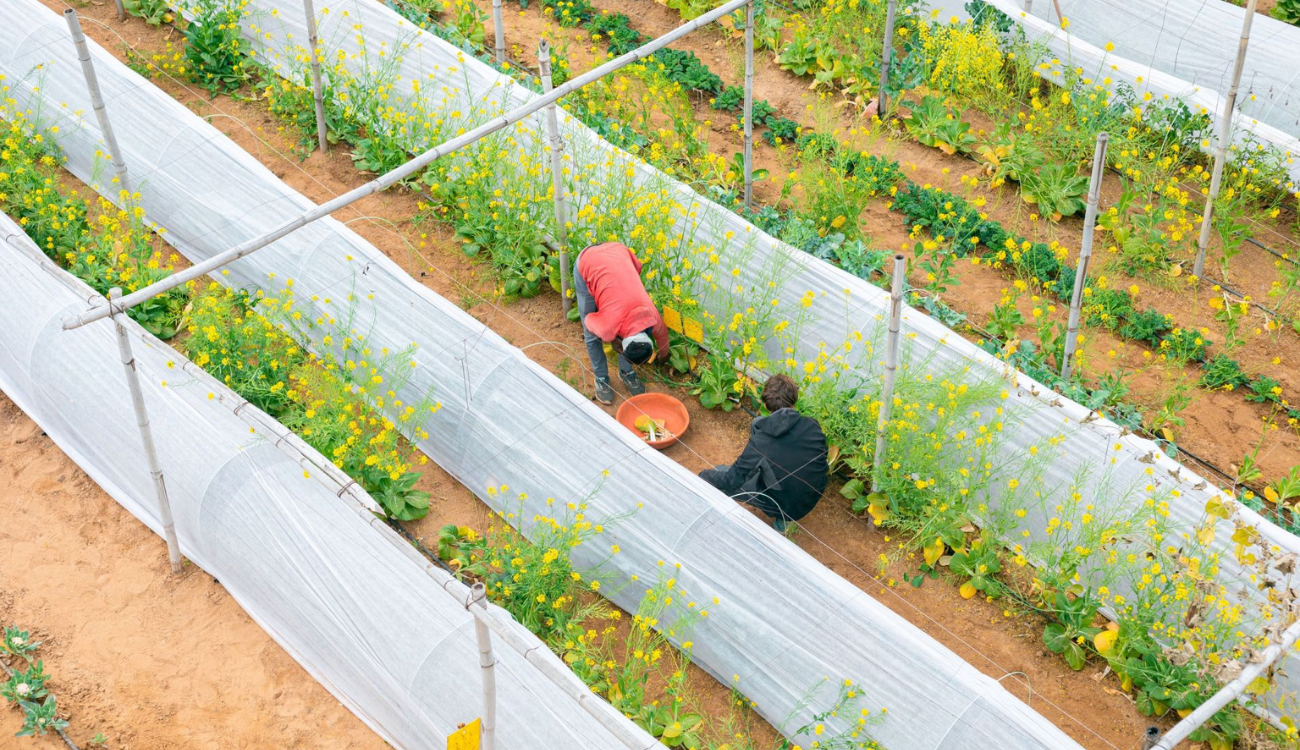
On a farm, effort does not always translate into immediate or visible results. Days of preparation, hours spent tending the soil, careful watering, and quiet observation do not always lead to a harvest you can hold in your hands. Some seeds grow into strong, healthy plants. Some struggle despite care. Some never fruit at all. And yet, none of this effort feels wasted.
At Aranyavas Natur Retreat, harvest is not measured only by what reaches the kitchen or appears on a plate. It is understood as something broader and slower. Harvest includes what returns to the soil, what strengthens the land, and what teaches patience to those working alongside it. The farm gives back in ways that are not always obvious, but always essential.
Here, farming is not driven by constant output or visible abundance. It is shaped by attentiveness, restraint, and a willingness to accept uncertainty. What the farm offers in return is not always produce—it is perspective.
Agriculture teaches humility in its purest form. You can prepare the soil carefully, choosing the right beds and spacing. You can water at the right times, protect young plants, and stay attentive to changes in weather, and still, the outcome may not match your expectations.
This is not failure. It is simply nature responding in its own way.
Guests often arrive with a fixed idea of what a farm should look like—orderly rows heavy with vegetables, visible signs of productivity at every turn. But real farming is rarely consistent or predictable. It is uneven, seasonal, and honest. Some plots perform beautifully, offering growth and vitality. Others remain sparse or underperform, despite equal effort.
Both outcomes matter. Both are part of the learning. A farm is not a display; it is a process. When seen closely, even the beds that do not yield vegetables still hold value in the larger rhythm of the land.
On the farm, nothing is treated as excess or discarded. Even when crops do not yield fruits or vegetables, they are not removed from the system. They continue to serve a purpose.
Plant residue becomes green fodder for the cows. What remains on the land is left to return to the soil as mulch. Over time, this organic matter breaks down naturally, enriching the soil and becoming compost that supports the next cycle of planting.
This circular rhythm is what keeps the farm alive. Plants feed animals. Animals enrich the soil. The soil, in turn, nurtures future growth. Each stage supports the next, even when the outcome is not immediately visible.
When farming is viewed this way, the question shifts. It is no longer “What did we get from this?” but “What did we give back?” Productivity is not removed from the equation, but it is no longer the only measure of success.
There is a quiet satisfaction in pulling a vegetable from the soil. It is not loud or celebratory. It does not come with excitement or display. Instead, it arrives as a sense of rightness—a feeling that something has reached its natural conclusion.
Guests who take part in harvesting often experience this shift. What stays with them is not the quantity collected, but the connection formed. The act of harvesting slows the pace of thought. It draws attention to effort, time, and care.
Food tastes different when its journey is visible. When you have seen the soil, the growth, and the patience involved, even a simple meal carries meaning. The harvest becomes less about abundance and more about awareness.
Farming teaches acceptance as much as it teaches effort. You work steadily, stay observant, and still learn to release control. Some seasons are generous, offering growth with little resistance. Others are restrained, demanding patience and adjustment.
Both are necessary. Both are instructive.
At Aranyavas, this understanding shapes how everything is approached—from growing food to hosting people. The focus remains on doing one’s best, listening carefully, and allowing outcomes to unfold naturally. There is effort, but there is no force.
This mindset encourages balance. It acknowledges that not every season will look the same, and not every effort will produce visible results. What matters is consistency, care, and respect for the process.
The farm does not respond to urgency. It does not reward impatience. Its gifts arrive slowly, often without announcement. Healthier soil, calmer minds, better meals, and deeper patience emerge over time, not all at once.
When guests leave after spending time here, many carry these lessons with them. They leave with an understanding that not every effort needs applause, and not every process needs immediate proof of success.
Sometimes, simply being part of a cycle—giving effort, accepting uncertainty, and allowing time to do its work—is reward enough. The farm gives back quietly, but what it offers stays long after the visit ends.

We’re excited to help you plan your experience at Aranyavas. Please share your details below, and we’ll get in touch with you within 2 working days