
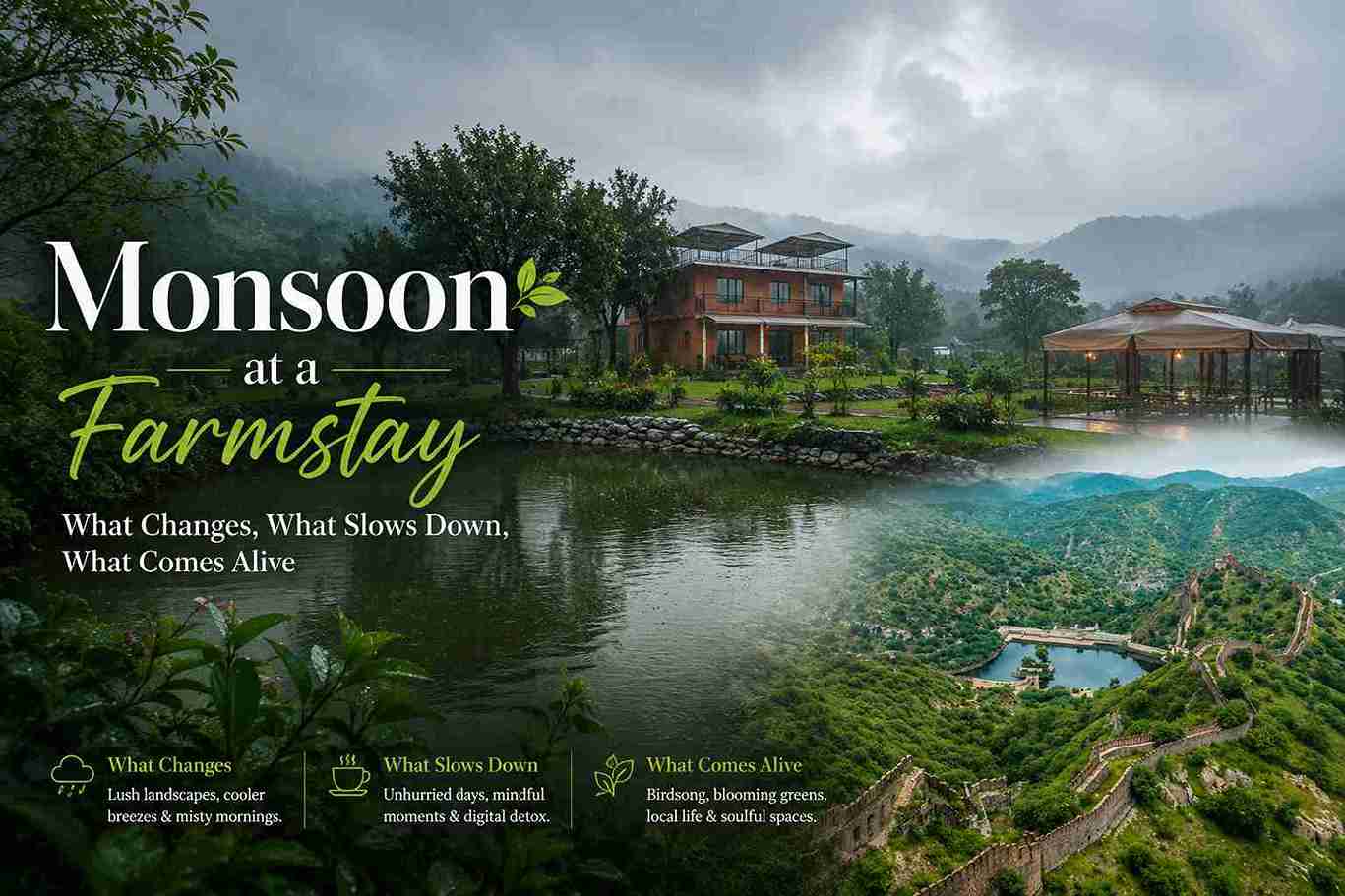
While monsoons often bring urban disruptions like traffic, on a farm, they mark a vital new growth cycle. Rainwater naturally fuels the development of the land, crops, and trees, making the season an essential part of how a farm functions.
A monsoon farmstay lets guests witness this refreshing transformation firsthand. The landscape turns greener and cooler, replacing city noise with natural sounds and inviting visitors to slow down and appreciate simple moments like watching rain fall over fields.
Daily routines on a working farm also adapt to the weather. Farmers carefully manage water and prepare the soil for new crops, offering guests a unique opportunity to observe active agricultural life and see how closely farming depends on natural cycles.
Whether you want a short escape or a peaceful nature retreat, a rainy season farm visit offers a fresh perspective on rural life. This guide explores what changes, slows down, and comes alive on the farm to help you get the most out of your stay.
The monsoon visibly changes a farm. After dry months, rain supports plant growth, replenishes water, and creates vital farming conditions, making the landscape active and refreshed.
Unlike sudden urban shifts, this transformation happens naturally over weeks. As fields turn green and wildlife activities increase, routines adjust to the weather, letting guests experience life on nature’s timetable.
The season’s first steady rains are a vital turning point, moistening dry fields for crop cultivation and replenishing natural water sources.
Visible changes appear quickly as grass grows, trees produce fresh leaves, and the dusty brown landscape transforms into vibrant shades of green.
Regular rainfall keeps soil healthy by supporting organisms and improving crop growth. While proper management is essential, seasonal rain remains a fundamental resource for agriculture.
Monsoon farmstays bring a noticeable weather shift, offering cooler, more comfortable temperatures than summer that make outdoor spaces pleasant whenever rain permits.
The air feels fresher after rain, releasing a natural, earthy aroma from wet soil. Combined with the scent of trees and plants, it creates an atmosphere far removed from city life.
Mornings often begin with light mist over fields, with drifting clouds and weather ranging from gentle showers to brief sunshine, giving the countryside a peaceful, ever-changing appearance.
Rain favors plant growth and increases bird and insect activity by making food and water readily available.
Farm guests can observe butterflies among flowers, dragonflies over fields, active birds, and frogs emerging near ponds after rainfall.
Although visible wildlife varies by farm environment, the monsoon consistently brings a rewarding new energy to the countryside for nature lovers.
The monsoon alters a farm’s appearance and operations by supporting plant growth, replenishing water, and shaping daily routines. Though farms vary, these seasonal changes are common during the rainy months.
Visitors can experience a working farm during this active season, enjoying a refreshed landscape where daily life follows nature’s rhythm rather than a fixed schedule.
During the monsoon, dry summer fields transform dramatically, turning green as grasses, crops, and native plants grow.
Rain washes away dust from plants, causing trees to produce fresh leaves, gardens to become more colorful, and vegetation to spread across the farm.
Depending on the location, guests can enjoy green hills, flowering paths, and vibrant fields, making this scenery a highlight of a monsoon farmstay.
Steady rainfall replenishes farm water sources, filling ponds and activating seasonal streams and small water channels.
These water bodies sustain crops, livestock, and local vegetation, while also creating essential habitats for wildlife like birds, frogs, and insects.
Many farms conserve rainwater through methods like ponds or check dams to store water for future agricultural use, supporting farming beyond the rainy season and promoting responsible resource management.
Unlike many workplaces that follow fixed schedules, farming often depends on weather conditions. During the monsoon, rain influences when certain tasks can be carried out.
After a heavy shower, farmers may wait for the soil to reach the right moisture level before beginning field work. If rainfall continues throughout the day, some outdoor activities may be postponed until conditions improve.
This flexibility is a normal part of farm life. Rather than working against nature, farmers plan their activities around changing weather conditions. Guests staying at a farm can observe how experience, planning, and patience help guide everyday agricultural work.
Every day during the monsoon can feel different. A bright morning may be followed by light afternoon showers, while cloudy skies may clear by evening. Some days receive continuous rainfall, while others remain cool with only occasional drizzle.
These changing conditions influence both farm work and guest experiences. Outdoor walks, gardening sessions, and other activities may be planned around the weather to ensure comfort and safety.
Instead of following a strict itinerary, a farmstay in monsoon encourages visitors to enjoy each day as it comes. Watching clouds move across the fields or listening to gentle rain can become part of the overall experience.
Every day during the monsoon can feel different. A bright morning may be followed by light afternoon showers, while cloudy skies may clear by evening. Some days receive continuous rainfall, while others remain cool with only occasional drizzle.
These changing conditions influence both farm work and guest experiences. Outdoor walks, gardening sessions, and other activities may be planned around the weather to ensure comfort and safety.
Instead of following a strict itinerary, a farmstay in monsoon encourages visitors to enjoy each day as it comes. Watching clouds move across the fields or listening to gentle rain can become part of the overall experience.
The monsoon brings growth and activity to nature, but it also encourages a slower pace of life. While farming continues throughout the season, many activities are carried out with greater care and patience.
For guests, this slower rhythm often becomes one of the most rewarding parts of the visit. Without the constant rush of daily routines, there is more time to relax, observe nature, and appreciate simple moments.
Life at a farm is generally quieter than life in a city, and the monsoon makes this difference even more noticeable.
Rain naturally slows the day’s pace. Instead of moving quickly from one task to another, people often wait for showers to pass before continuing outdoor work. This creates opportunities to pause, enjoy the surroundings, or spend time indoors with family and friends.
For visitors, this slower environment offers a welcome break from busy schedules, traffic, and constant notifications. It allows them to experience a different way of living where time is guided more by nature than by the clock.
Many outdoor experiences remain enjoyable during the monsoon, but they depend on weather conditions.
Nature walks are often best after light rain, when the surroundings are fresh and comfortable. Cycling routes may also be available, although muddy paths or heavy showers can sometimes require changes to the day’s plans.
Open-field activities, guided farm tours, and outdoor workshops may be adjusted or rescheduled if rainfall becomes too heavy. Responsible farmstays always place guest safety first while making the most of favourable weather whenever possible.
Being flexible allows visitors to enjoy the season without disappointment. Often, unexpected moments—such as watching rain from a covered veranda or walking through the farm after a shower—become lasting memories.
Farming depends on natural conditions that cannot be rushed. During the monsoon, patience becomes one of the most important parts of agricultural work.
Farmers often wait for the right balance of soil moisture before sowing seeds, transplanting young plants, or carrying out other field operations. Working too early or too late can affect crop growth, so careful observation is essential.
This teaches an important lesson about agriculture: successful farming is not only about hard work but also about understanding seasonal patterns and working with nature rather than trying to control it.
Guests who observe these processes gain a better appreciation of the knowledge and experience involved in farming.
A monsoon farmstay offers an environment where technology naturally becomes less important.
Instead of spending hours on mobile phones or laptops, many guests choose to enjoy the sounds of rainfall, watch birds from a shaded sitting area, or simply relax while looking across the fields.
The peaceful surroundings encourage people to slow down and be present in the moment. Reading a book, having conversations with family, or enjoying a cup of hot tea often feels more rewarding than scrolling through a screen.
This simple change in routine is one reason many travellers choose a slow travel farmstay during the rainy season. It offers space to disconnect from daily pressures and reconnect with nature, without the need for a busy schedule.
While some activities slow down during the rainy season, nature becomes more active in many visible and subtle ways. A farm during monsoon is not quiet—it is full of movement, sound, and seasonal life that is easy to miss in other parts of the year.
For guests, this is often one of the most engaging parts of a monsoon farmstay, because it allows them to notice small details of nature that are usually overlooked.
The monsoon supports natural plant growth. Many native plants respond quickly to moisture in the soil, and fresh greenery appears across open spaces, gardens, and field edges.
Depending on the region and farm environment, small seasonal flowers may also appear during this time. These are usually part of the natural ecosystem and grow without much human intervention.
The overall result is a landscape that feels fuller and more alive, with layers of green shades and scattered seasonal blooms.
Bird activity often increases during the monsoon. Trees and fields provide shelter, nesting opportunities, and food sources, making the farm a suitable habitat for many bird species.
Guests may notice birds calling more frequently, flying between trees, or visiting water sources after rainfall. Early mornings and late afternoons are often the best times to observe bird activity.
For nature lovers, this creates a simple but meaningful birdwatching experience without needing special equipment or guided tours.
Rainfall supports the growth of plants and flowers, which in turn attracts insects. Butterflies are often seen moving between flowering plants, especially during breaks in the rain.
Dragonflies may appear near water bodies or open wet areas, where they play an important role in the ecosystem. These insects help maintain ecological balance and are a natural part of farm life.
While insects are often overlooked in daily life, the monsoon makes their presence more visible and easier to observe.
Frogs are commonly associated with the rainy season, as they become more active in wet conditions. Their presence is often a sign of a healthy and balanced ecosystem.
Depending on the location, other small forms of wildlife may also become more noticeable during this season. These changes are part of the natural cycle of life on a farm.
It is important to observe wildlife from a distance and avoid disturbing their natural behaviour.
One of the most memorable aspects of a monsoon farmstay is the natural soundscape.
Instead of traffic or machinery, guests hear:
These sounds change throughout the day depending on weather conditions. A light drizzle creates a soft background sound, while heavier rainfall creates a deeper, more continuous rhythm.
Together, these natural sounds create a peaceful environment that many visitors find calming and refreshing.
Farming continues during the monsoon, but the work is carefully adjusted to suit weather conditions. Guests staying on a working farm may see a variety of seasonal activities depending on timing, rainfall, and crop cycles.
These activities are not staged for tourism—they are part of regular farm operations.
Soil preparation is an important step before planting seasonal crops. During monsoon, farmers wait for the right moisture level in the soil before beginning work.
Once conditions are suitable, soil may be tilled or prepared to support seed sowing and plant growth. This process helps improve aeration and makes the soil ready for cultivation.
The monsoon is a key season for sowing many crops in India and other agricultural regions. Farmers carefully choose timing based on rainfall patterns and soil conditions.
Guests may observe sowing activities in fields when conditions allow. This is one of the most important stages in the farming cycle, as it sets the foundation for future growth.
Water plays a major role in monsoon farming. While rain is essential, too much water can also affect crops, so careful management is required.
Farmers may use drainage channels, field levelling, or other traditional and modern methods to ensure water is distributed properly across the land.
Rainwater collection and storage systems, where available, also help manage water for later use.
Some farms maintain nurseries where young plants are grown before being transplanted into fields.
During monsoon, conditions are often favourable for plant growth, so nursery care becomes an important task. This may include watering, protection from excess rain, and careful monitoring of plant health.
Plantation activities may also take place when weather conditions are suitable.
If the farm includes livestock, additional care is needed during the rainy season. Animals are usually kept in clean, dry shelter areas, and their feeding and health are monitored more closely.
Wet conditions require attention to hygiene and comfort, ensuring animals remain safe and healthy throughout the season.
A monsoon farmstay is not defined only by activities, but by small everyday moments. The rain changes how these moments feel. Simple things like walking, eating, or sitting quietly become more meaningful because of the surroundings.
These are not planned experiences in a formal way. They happen naturally as part of daily life on a farm during the rainy season.
After a spell of rain, farm paths often feel fresh and clean. The air is cool, and the surroundings look greener than usual. Walking in such conditions is one of the simplest ways to experience the farm.
The ground may be soft or slightly muddy in places, so guests are encouraged to move slowly and wear suitable footwear. The experience is not about distance or speed, but about observing nature up close.
Cloud movement is one of the most visible changes during monsoon days. In many rural areas, clouds pass low across fields, trees, and hills, changing the light and mood of the surroundings.
Sitting quietly and watching these changes can feel calming. The landscape may shift from bright to grey within minutes, offering a natural rhythm that is very different from city environments.
Food during a farmstay is often simple and seasonal. During the monsoon, warm meals are especially comforting after time spent outdoors in the rain.
Depending on the farm’s practices, meals may include locally grown ingredients. The focus is usually on freshness and home-style preparation rather than elaborate presentation.
Covered outdoor spaces become one of the most used areas during the rainy season. Verandas or shaded seating areas allow guests to stay connected with the outdoors while staying dry.
This is often where guests read books, talk with family, or simply watch rainfall over the fields. The sound of rain in the background adds to the experience without requiring any activity.
One of the most common monsoon experiences is having a hot cup of tea while it rains. It is simple, but it fits naturally with the season.
The combination of warm drinks and cool air creates a comfortable balance. Many guests find this moment memorable because it does not require any planning—just time and presence.
Monsoon light changes frequently. Cloud cover, rainfall, and breaks of sunlight create different moods throughout the day.
For guests who enjoy photography, this offers natural variety. Common subjects include wet fields, plants after rain, birds, reflections in water, and misty surroundings.
The focus is usually on natural scenes rather than staged setups, which makes the experience more authentic.
The monsoon is an important growing season for many crops. Depending on the region and type of farm, different fruits, vegetables, and local produce may be available during this time.
It is important to note that availability can vary based on soil, climate, and farm practices.
During the rainy season, farms often focus on crops that grow well in moist conditions. This may include a mix of seasonal vegetables, leafy greens, and region-specific produce.
Fresh ingredients are usually harvested in small quantities based on need rather than large-scale commercial farming. This supports freshness and reduces storage time.
Guests may sometimes see vegetables being picked directly from the field and used in daily meals, depending on the farm’s setup.
Many farmstays follow a simple farm-to-table approach, where available produce is used in meal preparation. During monsoon, this becomes even more seasonal because growth cycles are active.
Meals are generally planned based on what is available and freshly harvested. This ensures that food is aligned with the natural cycle of the farm rather than fixed menus.
The focus is on freshness, local cooking styles, and simple preparation methods that highlight natural flavours.
A farm during monsoon becomes more active with plants, insects, birds, and small wildlife. Visitors may come across many natural sights that are part of the ecosystem. The key is to observe responsibly and avoid disturbing the natural balance.
A farmstay is not a zoo or controlled space. It is a working environment where nature and agriculture exist together. Respecting this balance helps protect both the farm and the wildlife that depends on it.
During the rainy season, you may notice frogs, birds, butterflies, and other small creatures more often than usual. These are part of the natural cycle and should be observed from a distance.
Avoid touching, chasing, or feeding wild animals. Even small actions can disturb their behaviour or habitat. The best way to enjoy wildlife is to simply watch quietly.
Farm areas may include fields, irrigation zones, plantation areas, and walking paths. Staying on marked or guided paths helps protect crops and reduces damage to wet soil.
Walking through fields without guidance can also be unsafe during monsoon due to slippery ground or hidden water patches. Following instructions from the farm team ensures a safe experience.
Wet areas, bushes, and water bodies often become temporary habitats for insects and small animals during the monsoon. These spaces should not be disturbed.
Avoid throwing waste, stepping into restricted areas, or removing plants and natural elements. Keeping the environment clean and untouched helps maintain the farm’s natural balance.
Every farm may have its own safety rules depending on layout and weather conditions. These may include instructions related to walking areas, rain safety, or animal zones.
Listening to farm staff and following basic guidelines ensures a safe and smooth experience, especially during heavy rainfall or wet conditions.
Packing correctly for a monsoon farm stay makes a significant difference in comfort. Since the weather can change quickly, it is best to prepare for both rain and dry conditions.
A light raincoat or waterproof jacket is very useful during monsoon. Umbrellas can also help during short walks between buildings or outdoor areas.
Waterproof clothing helps you stay comfortable during sudden showers without interrupting your plans.
Footwear is one of the most important parts of monsoon travel. Choose shoes or sandals with good grip, as paths may become slippery or muddy.
Avoid footwear that is difficult to clean or uncomfortable in wet conditions.
Carrying extra clothes is recommended during the rainy season. Wet clothes can take longer to dry due to humidity.
Light, breathable fabrics are generally more comfortable in humid weather.
Since insects become more active during monsoon, basic protection like mosquito repellent can be helpful, especially during evenings.
This ensures a more comfortable outdoor experience.
It is always advisable to carry any personal medications you may need. Sudden weather changes can affect individuals differently, so basic preparedness is important.
Monsoon landscapes are visually rich, with changing light, greenery, and rainfall scenes. A camera or smartphone can help capture these moments.
Using a waterproof bag or cover is recommended to protect electronic items during rain.
A monsoon farmstay offers a different kind of travel experience. It is not about packed schedules or fast-paced tourism. Instead, it focuses on nature, rest, and simple living.
Rain naturally reduces noise and creates a calm environment. For many guests, this quiet atmosphere is one of the main reasons to visit a farmstay during monsoon.
Compared to peak summer, monsoon temperatures are usually more comfortable. This makes outdoor time easier when rain is light or intermittent.
The landscape becomes greener and more vibrant during the rainy season. Fields, trees, and plants all reflect seasonal growth.
Guests can observe how farming changes with weather. This includes soil preparation, planting, water management, and daily adjustments based on rainfall.
With fewer distractions and a slower pace, many visitors naturally spend less time on screens. This creates space for rest, reflection, and real connection with surroundings.
A monsoon trip becomes more enjoyable when expectations are aligned with the season. Flexibility and openness are key.
The weather can change quickly during the monsoon. It is better to treat plans as adaptable rather than fixed.
Instead of trying to do too many activities, focus on experiencing the environment at a relaxed pace.
If farm activities are happening, joining them (when allowed) can give a better understanding of rural life.
Simple observation—like watching rain, birds, or clouds—can be one of the most rewarding parts of the stay.
Monsoon is a natural cycle. Accepting its unpredictability helps you enjoy the experience more fully.
Is monsoon a good time to visit a farmstay?
Yes, monsoon can be a good time to visit a farmstay if you enjoy nature, rain, and a slower pace of travel. The experience is different from other seasons because farming activity, greenery, and weather all change together. However, it is best suited for travelers who are comfortable with unpredictable weather.
Are farm activities available during the rainy season?
Some farm activities continue during monsoon, but they depend on weather conditions. Tasks like soil preparation, planting, nursery work, and water management may take place when conditions allow. Outdoor activities are flexible and may change based on rainfall.
What clothes should I pack for a monsoon farmstay?
Light and comfortable clothing is best, along with a waterproof jacket or raincoat. Quick-dry fabrics are more practical during this season. It is also important to carry extra clothes, as humidity can slow drying time.
Is it safe to visit a farm during heavy rains?
Farmstays generally follow basic safety guidelines to ensure guest safety during monsoon. However, during very heavy rainfall, some outdoor movement may be limited. Guests are advised to follow instructions from the farm team and avoid risky areas like slippery fields or fast-flowing water zones.
Can families with children enjoy a farmstay in the monsoon?
Yes, families can enjoy a monsoon farmstay if proper care is taken. Children should always be supervised, especially near wet or uneven areas. Many families enjoy the open space, fresh air, and simple outdoor experiences during lighter rain.
What wildlife can guests commonly observe during the rainy season?
During monsoon, guests may observe birds, butterflies, frogs, and other small insects more frequently. These sightings depend on the local environment and natural conditions of the farm. Wildlife is best observed quietly without disturbing their habitat.
The monsoon season brings a clear transformation to farm life. Fields turn green, water sources fill up, and the entire ecosystem becomes more active. At the same time, daily routines slow down and follow the natural rhythm of rain and soil.
Some activities become less frequent or weather-dependent, but nature itself becomes the main experience. Birds, insects, plants, and changing landscapes create a living environment that feels calm, fresh, and constantly changing.
A monsoon farmstay is not about fast travel or packed schedules. It is about slowing down, observing nature, and experiencing rural life as it adapts to the rainy season. For travelers who appreciate simplicity, fresh air, and quiet surroundings, it offers a meaningful break from urban life.
In the end, the monsoon does not interrupt life on a farm—it reshapes it. And for visitors, that reshaping becomes the most memorable part of the journey.

We’re excited to help you plan your experience at Aranyavas. Please share your details below, and we’ll get in touch with you within 2 working days