
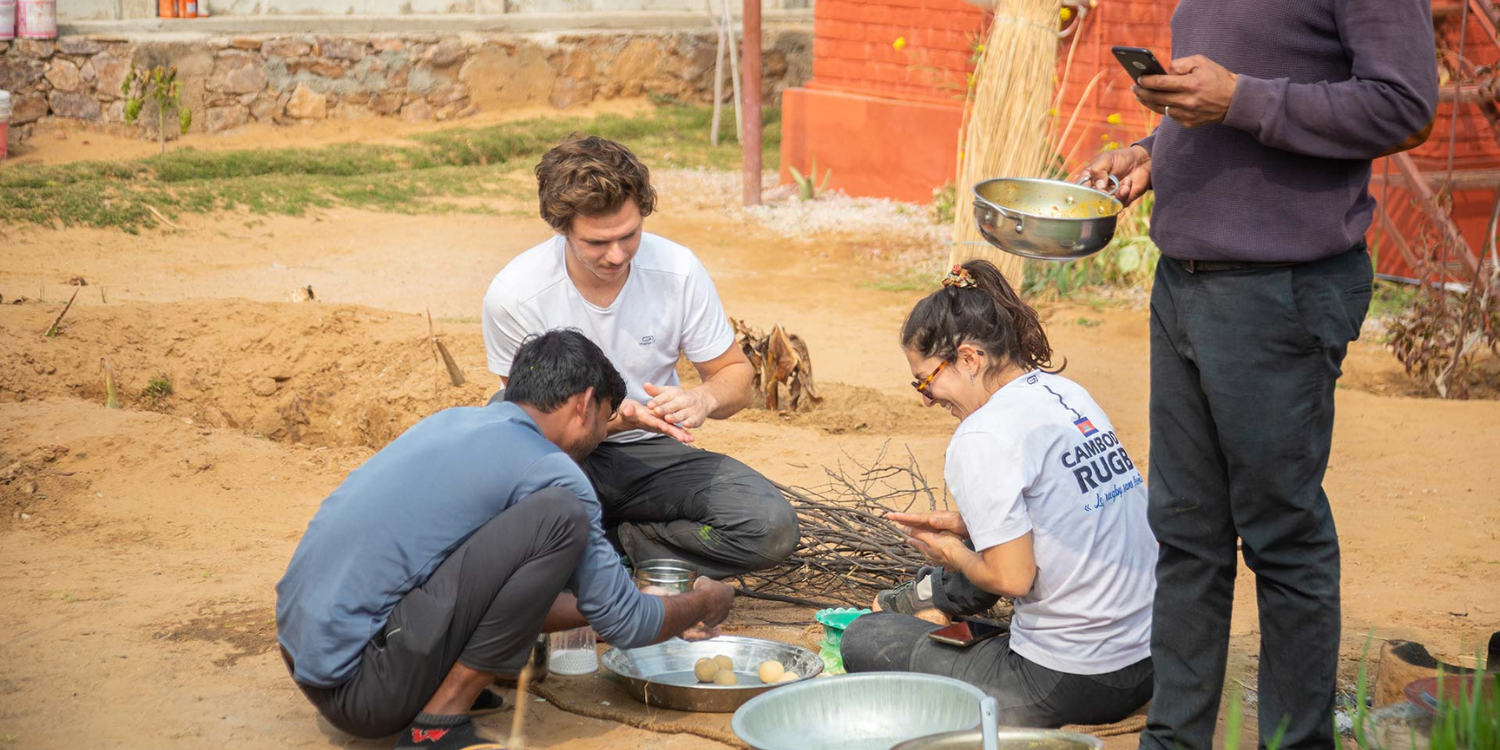
Hosting teaches you very quickly that no two people arrive with the same expectations. Each guest carries their own idea of what a meaningful stay should feel like. Some come searching for quiet moments and the restorative calm that nature can offer. Others arrive with curiosity and energy, hoping to explore, learn, and experience something different from their everyday routine.
At Aranyavas Nature Retreat, this diversity of expectations becomes particularly noticeable during March. As the seasons begin to shift and more guests visit the farmhouse, the range of perspectives becomes clearer. Some visitors want long walks, open skies, and stillness. Some want conversations about farming, sustainability, and the rhythms of rural life. Others simply want to step outside, breathe fresh air, and spend time away from the pace of urban living.
Over time, hosting teaches us that this variety is not something to manage—it is something to understand.
One of the most important parts of hosting is listening. Every guest arrives with their own experiences, assumptions, and expectations, and these perspectives shape how they see a place. Not everyone immediately understands what Aranyavas is trying to be—and that is completely natural.
Some guests may expect a traditional -style experience. Others may arrive already familiar with the idea of a farmstay and the slower rhythm that comes with it. Both viewpoints are valid because they come from personal experiences and different ways of seeing the world.
By listening carefully, without rushing to correct or explain, we begin to understand what guests are really looking for. This kind of listening allows us to identify where we can communicate more clearly, where small improvements may help, and where patience is more valuable than explanation.
Often, the act of listening itself creates a sense of respect and openness that makes the experience better for both the guest and the host.
Feedback plays an important role in shaping any hospitality experience. It helps us understand how our intentions are being perceived by the people who spend time here. Sometimes feedback highlights small details that can be improved—perhaps something related to comfort, clarity of communication, or the overall flow of a guest’s stay.
At other times, feedback reveals something different. It may simply show that a particular expectation does not naturally belong within this space.
Over time, we have learned that feedback works best when it is treated as a mirror rather than a command. It reflects how people experience the place, but it does not always require immediate change.
Some suggestions guide us toward thoughtful improvements. Others help us recognize what makes the retreat unique and worth protecting. Both forms of feedback are valuable because they contribute to a clearer understanding of what the experience should remain and what it can gently evolve into.
A place like Aranyavas cannot be designed to satisfy every possible expectation—and that clarity is important. The retreat is first and foremost a working farm and a nature-based space. Its character is shaped by natural cycles, seasonal changes, and the everyday rhythms of rural life.
These rhythms do not always adjust themselves to convenience or predictability. Farming operates on its own pace, guided by weather, soil, and time. This means the experience here is often quieter, simpler, and more grounded than what many people are used to in conventional hospitality spaces.
Recognizing this helps us host with greater ease. Instead of trying to reshape the environment to fit every expectation, we focus on presenting the space honestly and thoughtfully. Guests who connect with that intention often find the experience meaningful in ways that are different from a typical getaway.
With time, hosting teaches discernment—the ability to know when to adapt and when to remain steady in the values that define the place.
The farm itself offers a quiet but powerful lesson about expectations and outcomes. In agriculture, not every seed grows in the same way, even when planted in the same soil. Some plants thrive quickly, while others take longer to establish themselves. A few may struggle despite careful attention.
This does not mean the land has failed. It simply means that conditions, timing, and natural variations shape the result.
Hosting carries a similar lesson. Different guests experience the same place in different ways. What feels deeply peaceful to one person may feel unfamiliar or unusual to another. Understanding this allows us to approach hosting with patience rather than pressure.
The farm reminds us that diversity in response is natural, and that every interaction is part of a broader process of learning and growth.
Each season brings new experiences and new perspectives. As guests come and go, their observations and responses gradually help refine our understanding of who Aranyavas is truly meant for.
We continue to listen carefully, learn from thoughtful feedback, and make adjustments where they genuinely improve the experience. At the same time, we remain grounded in the principles that inspired this place from the beginning—simplicity, connection with nature, and respect for the rhythms of the land.
Hosting, much like farming, is not something that becomes perfect overnight. It is a continuous practice. You show up each day with care, pay attention to what unfolds, and allow clarity to develop naturally over time.
In that process, both the place and the people who care for it continue to grow.
