
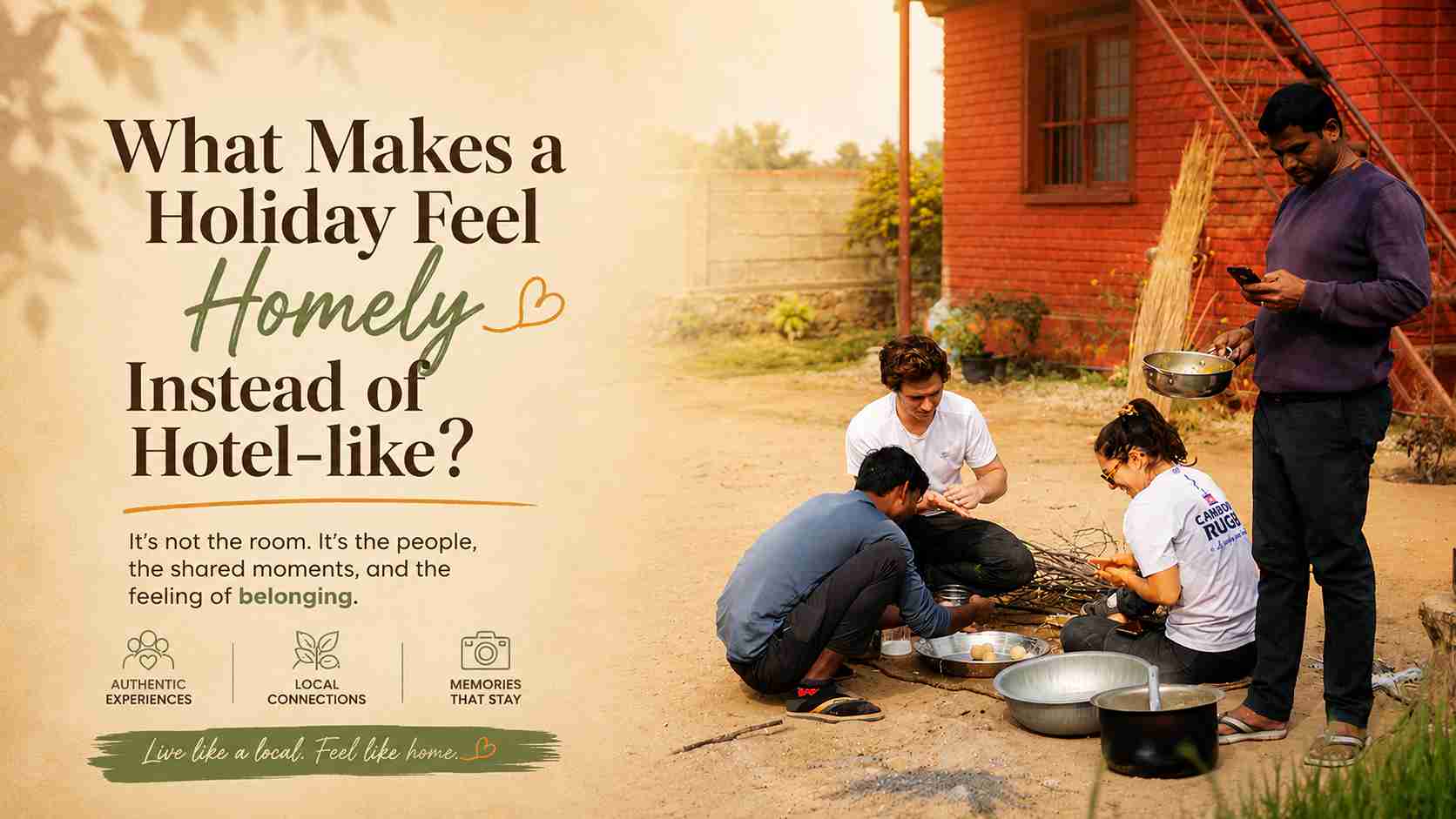
Most people can remember at least one holiday that made them feel surprisingly comforting. Not necessarily the most luxurious one, or the most expensive, but the one that somehow felt easy to settle into. The kind of trip where mornings felt slower, conversations felt more natural, and leaving felt harder than expected.
Then some holidays look perfect on paper but somehow feel emotionally distant. The room is beautiful, the service is efficient, and everything works exactly as expected — yet the experience feels temporary, transactional, or impersonal.
Increasingly, travellers are moving beyond simply searching for amenities or star ratings. They are looking for something harder to define but easier to feel: comfort, warmth, familiarity, and emotional ease. In other words, they want holidays that feel homely rather than hotel-like.
A homely holiday does not mean sacrificing comfort or luxury. It means experiencing a place where you feel welcomed instead of processed, relaxed instead of scheduled, and emotionally settled instead of constantly “checked in.”
So, what exactly creates that feeling?
When people say a place feels homely, they rarely mean it resembles their house.
Instead, they are usually describing a feeling.
A homely holiday experience often creates emotional comfort. It feels familiar without being repetitive, peaceful without being empty, and welcoming without trying too hard.
It is the difference between:
Many travellers do not actively search for this feeling in advance. They only realise its value after experiencing it.
The irony is that in a world obsessed with premium experiences, what people often miss most is emotional comfort.
Hotels serve an important purpose. They provide reliability, convenience, consistency, and structure — qualities many travellers value.
But standardisation can sometimes create emotional distance.
In many hotel environments, everything is designed to be universally acceptable.
The rooms may follow a familiar layout. Meals may be organised around fixed schedules. Guest interactions may be polite but procedural.
This predictability works well for business travel or short urban stays. But for people seeking rest, slowness, or emotional reset, the experience can sometimes feel transactional.
You arrive, check in, consume the experience, and leave.
The memory remains functional rather than personal.
Efficiency is useful. Warmth is memorable.
Many travellers today are not only searching for clean rooms or premium amenities. They are searching for emotional ease — places where hospitality feels thoughtful rather than formal.
Simple experiences often leave stronger impressions than grand gestures:
These moments do not feel manufactured. They feel lived.
Often, it is not the large experiences but the smaller emotional details that change how a holiday feels.
Some accommodations are designed for movement.
You sleep, refresh, and head out.
Others invite stillness.
A comfortable outdoor corner, natural surroundings, open spaces, or quiet seating areas subtly change traveller behaviour. Instead of constantly asking, “What should we do next?” people begin asking, “Can we stay here a little longer?”
That shift matters.
A homely stay gives people permission to pause.
Homely experiences often remove emotional friction.
You feel relaxed enough to read a book longer than planned. Meals feel calmer. Conversations stretch naturally.
Nothing feels overly formal or performative.
Importantly, this comfort is not about recreating routine. It is about creating emotional ease.
People do not necessarily want home replicated.
They want the comfort home provides.
Food strongly influences emotional memory during travel.
Many people remember trips through meals: easy breakfast, simple comforting food after a long drive, fresh local ingredients, or meals enjoyed without rush.
Hotel dining can sometimes feel scheduled or standardised.
Homely travel experiences often feel more grounded. Meals feel less like service and more like part of the day.
Not extravagant. Simply comforting.
The emotional difference is subtle but powerful.
One overlooked reason some holidays feel homely is the environment.
Noise, crowding, overstimulation, and constant movement can create mental fatigue, even during leisure travel.
Natural surroundings often change how people emotionally interact with a place.
When travellers enter calmer environments, something shifts.
People speak more slowly.
Phones stay aside longer.
Meals stretch.
Even silence becomes more comfortable.
This is not because nature magically solves stress, but because quieter settings reduce the constant stimulation many people experience in everyday life.
Without endless interruptions, travellers often feel more emotionally present.
Crowded environments often demand movement.
Nature encourages pause.
Open skies, fresh air, greenery, or peaceful surroundings can subtly create psychological spaciousness — a feeling of having room to think, breathe, and simply exist without urgency.
For many modern travellers, this emotional spaciousness feels deeply restorative.
Luxury can impress people.
Warmth makes people return.
One major difference between a hotel-like and a homely stay is emotional connection.
Good service solves needs.
Good hospitality understands comfort.
The distinction matters.
A perfectly efficient stay may still feel forgettable if interactions remain purely procedural.
On the other hand, thoughtful hospitality — friendliness, patience, warmth, attentiveness without pressure — can leave a lasting emotional impression.
People rarely remember logistics.
They remember how a place made them feel.
Travel can sometimes feel repetitive.
Check-ins, schedules, queues, transactions.
Homely holidays interrupt that rhythm.
Instead of feeling like another booking number, travellers often appreciate experiences that feel slower, calmer, and more human.
Even simple interactions feel meaningful when they feel genuine.
Many travellers are quietly moving away from checklist-style holidays.
The idea of rushing between attractions, tightly packed itineraries, and constantly “doing more” can become exhausting.
Fast travel prioritises activity.
Slow travel prioritises experience.
When travellers stop trying to optimise every minute, something surprising happens: holidays begin feeling restful again.
People notice details.
Morning light feels memorable.
Meals become experiences instead of pit stops.
Unexpected conversations matter.
Rest stops feeling unproductive.
Many modern holidays accidentally become performance-driven.
Photos, schedules, itineraries, reservations, productivity disguised as leisure.
Homely holidays often feel different because they remove performance pressure.
You are not trying to maximise every second.
You are simply inhabiting the experience.
That emotional shift changes everything.
Different travellers seek different experiences, but emotional comfort tends to matter across groups.
Families often value places where things feel uncomplicated.
Room to relax, comfortable environments, calmer surroundings, and slower rhythms can make travel feel easier.
A holiday feels better when parents feel less rushed and children feel freer.
For couples, memorable holidays are not always activity-heavy.
Sometimes they simply involve uninterrupted time.
Quiet surroundings, meaningful conversations, slower mornings, shared meals, and time without digital interruptions often matter more than packed schedules.
Solo travellers frequently value emotional safety and comfort.
Places that feel calm, welcoming, and easy to settle into can create a stronger sense of belonging.
The ability to slow down without pressure becomes part of the experience itself.
Not every traveller wants the same thing. But if emotional comfort matters to you, it helps to look beyond star ratings and room photos.
Ask different questions:
Look at the overall atmosphere.
Do visuals suggest calmness, warmth, nature, comfort, and slower experiences?
Or do they feel highly standardised and fast-paced?
Think beyond rooms.
Ask yourself:
Read descriptions carefully.
The strongest stays often communicate feeling, not features.
Instead of only listing facilities, they often express experiences: comfort, quietness, connection, relaxation, meaningful moments.
That emotional language often signals a more personal stay.
Modern life feels increasingly fast, crowded, and digitally demanding.
Because of this, many people are quietly redefining what a “good holiday” means.
Luxury still matters.
Comfort still matters.
But emotional restoration matters more.
People increasingly value:
The shift is not about rejecting hotels.
It is about wanting something emotionally fuller.
A holiday that feels restorative rather than merely impressive.
The holidays people remember most are not always the grandest.
Often, they are the ones where time slowed down.
Where mornings felt unhurried.
Where conversations stretched naturally.
Where silence felt calming instead of awkward.
Where comfort felt emotional, not transactional.
A homely holiday does not mean compromising on quality. It means choosing experiences that feel warmer, calmer, and more human.
Because sometimes, the best travel memories are not created by doing more.
They are created by feeling more settled, more present, and more at ease.
And perhaps that is what makes a holiday truly memorable: not feeling like you checked into somewhere temporary — but feeling, even briefly, like you belonged there.

We’re excited to help you plan your experience at Aranyavas. Please share your details below, and we’ll get in touch with you within 2 working days