
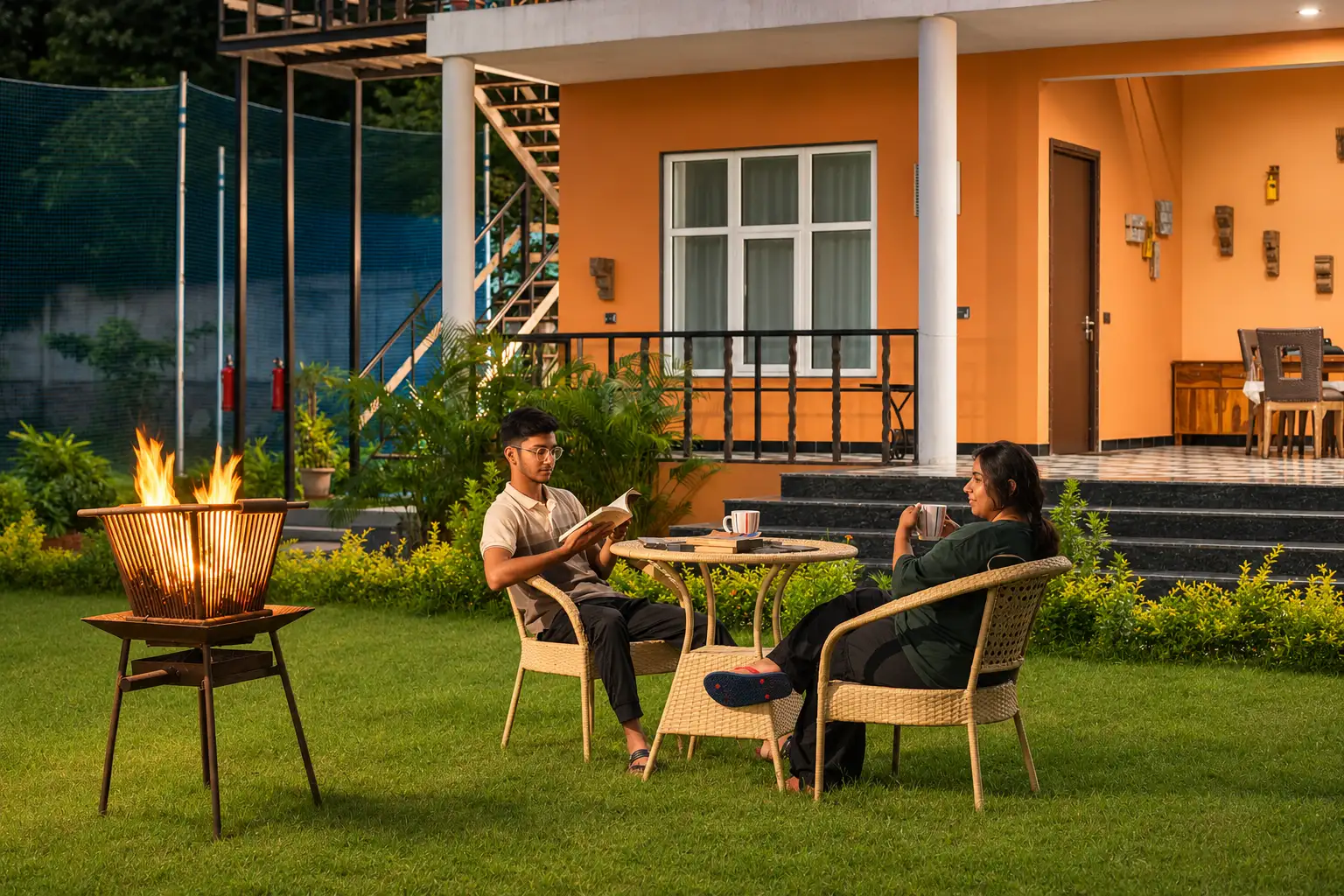
A Good Holiday Does Not Always Need a Checklist
A good holiday does not always need a checklist. A flexible plan gives you time to enjoy a place, rest, and change your mind without rushing for activities. Book your stay, transport, and anything essential, then leave room for the day to unfold. That might mean a second cup of chai, a walk that takes longer than expected, or an afternoon spent reading. These moments belong in a holiday as much as the places you came to see.
Key Takeaways
Plan essential arrangements and keep optional activities flexible.
Choose fewer stops so you have time to enjoy each and experience each spot.
Pick one daily highlight, with space around it for meals, rest, and changes.
Discuss pace, comfort, and interests with your travel companions.
Choose a stay where spending time on the property would feel worthwhile.
Why Ditching the Checklist Works
1. Mental Freedom: Fewer Timings to Manage
An itinerary with a lot of places listed can make every hour depend on the one before it. Breakfast runs late, a journey takes longer, and suddenly you are hurrying through a place you wanted to enjoy.With fewer fixed commitments, a small delay is easier to accommodate. You can finish a conversation or stay longer at a favorite spot without rearranging the whole day.
2. Spontaneous Joy: Room for Small Discoveries
Some experiences only become appealing once you arrive. A local market catches your attention. Your host mentions a dish you have never tried. An evening walk turns into a longer pause outdoors.Leaving time open allows you to follow that interest. An unexpected moment does not need to be spectacular to become a memory you value.
3. Return to Simplicity: Enjoying Ordinary Moments
For travelers, a slower holiday reminds them of childhood visits to a village or a relative's home. Meals, play, and conversations gave the day its shape. You can bring a little of that ease into a break today. Eat without watching the clock. Sit outside for a while. Let an ordinary afternoon be enough.
4. What Is a Holiday Without a Fixed Itinerary?
A holiday without a fixed itinerary has a clear travel framework and a flexible daily plan. You know where you will stay and how you will get there, but you have not assigned an activity to every hour.This approach fits the idea of slow travel: giving a place and its everyday life more attention, with less pressure to keep moving.You can still visit landmarks, book a guide, or wake early for something special. The important question is whether the plan suits the holiday you want.
How to Plan a Relaxed Holiday Without Overplanning
1. Start With How You Want to Spend Your Time
Before listing sightseeing, decide what you want more of: rest, time together, food, nature, or exploration.Use that answer when choosing activities. If you want a quiet weekend, a long drive followed by several outings may leave little time for the break you had in mind.
2. Choose Fewer Stops and a Convenient Base
Consider the journey as part of the day's effort. Check travel distances and allow time for meals, traffic, parking, and settling in.For a short break, one comfortable base may be easier than changing accommodation. Group nearby outings together and avoid crossing back and forth simply to cover more places.
3. Pick an Anchor, Not an Hour-by-Hour Itinerary
Choose one experience you would particularly enjoy that day. It could be a cooking session, a museum visit, a local market, or a sunset walk.Make the arrangements it needs, then keep other ideas optional. One daily highlight is a useful starting point, not another target to complete.
3. Drop the Early Morning Rush
If there is no departure or activity to catch, allow a slower morning. Have breakfast without immediately checking what comes next.An early start may still suit a particular experience or the weather. Choose it because it helps you enjoy the day, rather than because every holiday morning needs an alarm.
4. Wander With Curiosity
Walk through a nearby neighborhood or along a suitable trail with time to stop. Keep directions available and ask locally about access and the route back.In the countryside, check before entering fields or private land. Ask permission before photographing people, and let residents carry on with their daily routines.
5. Keep Some Time Free From Screens and Tasks
Put away work notifications where possible. Take photographs if you enjoy them, but allow moments that do not need to be recorded or shared.Avoid filling every gap with reading goals, journalling, or other tasks either. You can decide what you feel like doing when the free time arrives.
What Should You Still Plan in Advance?
Preparation is useful when it removes uncertainty that could interrupt your break. A flexible holiday still needs reliable essentials.
For a rural stay, confirm the map location, approach road, and transport arrangements. Check the forecast and ask about suitable outdoor timings for your dates.Keep a simple alternative for weather changes: time indoors, a meal, a game, or another available experience. Leave enough time for the return journey too.
Keep Some Time Free From Screens and Tasks
Some experiences need prior fixed arrangements. A train departure, guided visit, or limited-entry attraction or activity with a set start time cannot always move with your mood.Travelling with children, older relatives, or anyone with access needs may also require dependable meal times, rest breaks, and transport.Build the day around these requirements and keep flexibility around them. If you enjoy planning in detail, retain the structure that helps you feel comfortable and identify which stops you would happily skip.
How to Choose a Stay That Supports a Slower Holiday
If you intend to spend more time at your accommodation, ask, "Would I enjoy an afternoon here without going out?"
1. Check Comfort and the Actual Surroundings
Look at current room photographs, outdoor seating, shade, bathroom facilities, and seasonal arrangements. Ask about events, day visitors, and music if quiet matters to you.A rural setting has its own routines and sounds. Farm work, animals, and nearby activity may be part of the experience.
2. Find Out Which Experiences Need Booking
Ask which activities are optional, what advance notice they need, and whether they depend on weather, crops, or the season.A working farm follows agricultural tasks as well as guest preferences. Discuss participation with your host rather than assuming every activity is available every day.
3. Understand the Food Arrangements
At a farmstay, meals can be an opportunity to learn about ingredients and local cooking. Ask what is growing during your visit, how it may be used in the kitchen, and what comes from other suppliers.Farm-to-table food does not automatically mean every ingredient is grown on the property or produced organically. Discuss sourcing, dietary needs, and meal timings before booking.For more on this style of break, explore slow travel at Aranyavas.
How to Keep a Flexible Holiday Enjoyable for Everyone
1. Couples and Friends
Discuss what each person most wants from the trip. Agree on shared highlights and leave room for different interests.One person can take a walk while another reads. Spending time together does not require everyone to join every activity.
2. Families and Older Travellers
Keep familiar routines where they help, especially around food, rest, and essential care. Bring a few books or games for children and check supervision needs around animals, water, and farm equipment.Ask about steps, walking surfaces, seating, and bathroom access where relevant. A relaxed plan should still feel comfortable and manageable for the people following it.
A Flexible Farmstay Weekend Near Jaipur
The following is an illustrative way to organize a weekend. Confirm the stay's actual timings and available experiences separately.
1. Arrival Day: Settle In
Reach the property within its check-in window and leave time to unpack and have a meal. Take a short walk if the weather and your energy allow. You do not need an outing immediately after the journey.
2. Full Day: Choose One Highlight
Pick an available experience that interests you. Keep the remaining hours for meals, conversation, reading, or an optional outing.If you want to explore nearby, ask what fits comfortably into the time available. Allow for the journey back rather than adding stops along the way.
3. Departure Day: Leave Without a Rush
Enjoy breakfast and any time available before check-out. Keep your return arrangements clear and avoid squeezing in a final activity that makes departure stressful.
Experience a Slower Stay at Aranyavas
At Aranyavas Farmstay and Nature Retreat near Jaipur, agricultural fields and the nearby Aravalli range form the setting for a countryside break. Our listed experiences include farm activities, nature walks, cooking, and cycling.You do not need to fit every experience into one visit. Tell us what interests you and how much of your stay you would like to leave open.Share your dates, where you are travelling from, who is coming along, and whether you prefer mostly relaxation or gentle exploration. We can discuss the options for your visit. Confirm availability, timings, inclusions, and any additional charges before booking.A good holiday can include a famous landmark, an ordinary afternoon or both. Before adding another stop, ask whether you would enjoy it more than the time you would give up to fit it in.
Frequently Asked Questions
Can a short weekend count as slow travel?
Yes. Choose a manageable journey, stay in one place, and leave enough time to enjoy it. The pace of the break matters more than filling a long itinerary.
Is travelling without a fixed itinerary cheaper?
Not necessarily. Last-minute accommodation, transport or activities may cost more or be unavailable. Book essentials within your budget and keep optional spending separate.
What if I get bored with too much free time?
Keep a short list of possibilities instead of a timetable. A book, a game, a nearby outing or an available host-led experience gives you choices without committing the whole day.
