
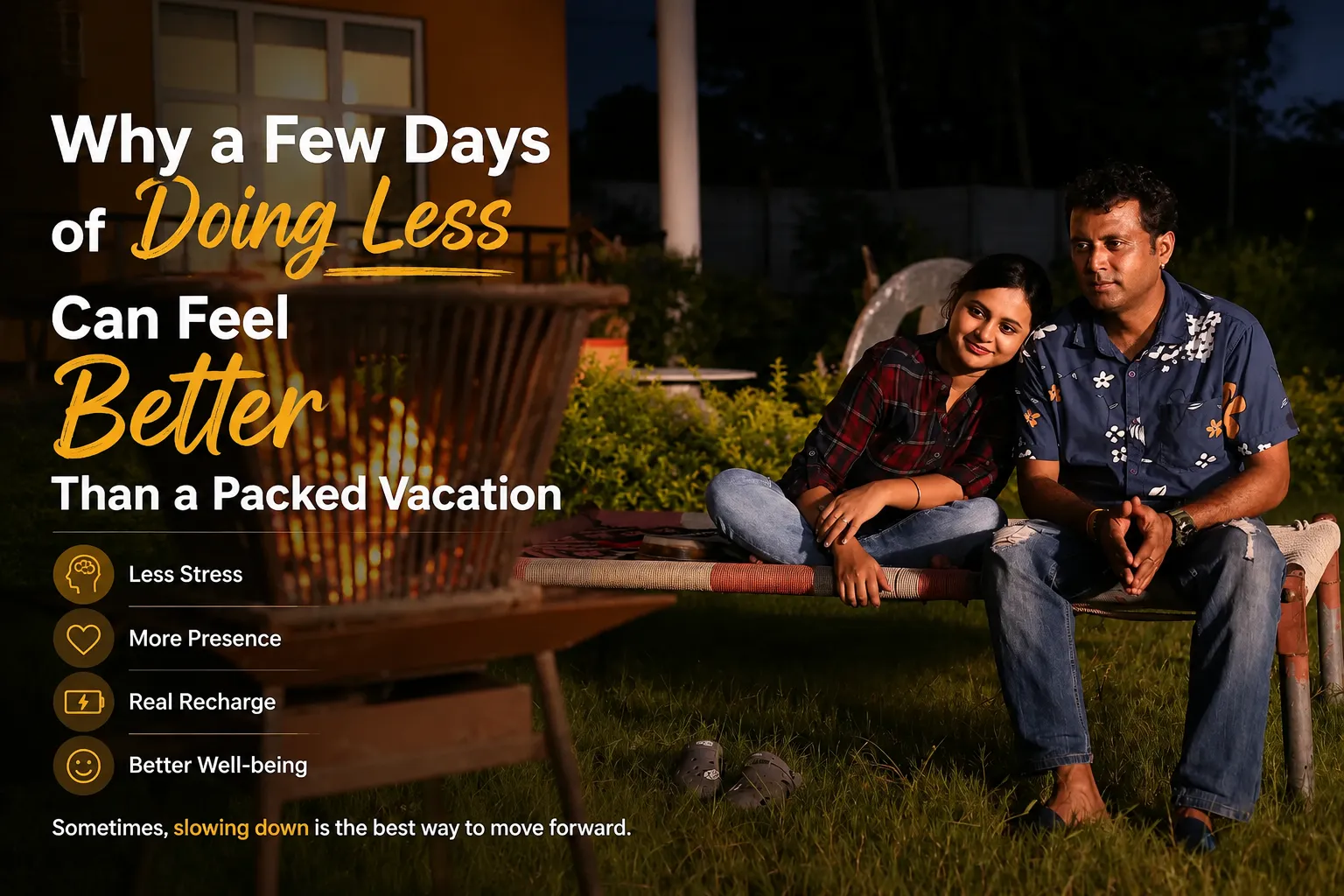
You wake up and, for once, there is nowhere you need to be.
There is no alarm asking you to wake up and get ready. No one is asking what the plan is. No need to hurry or worry about breakfast because something else is waiting.
You take your time. Maybe you go for a walk because the morning feels pleasant. You stop for a coffee. You sit somewhere longer than expected. Later, you have a meal without checking the time.
Nothing particularly extraordinary has happened.
And yet, by the end of the day, you feel rested.
That can seem strange when so much of travel is about seeing and doing more. We often return from a trip with a lot of photographs, reels, places visited, and activities you have completed. Yet sometimes, the holidays we remember most fondly are the ones where we did surprisingly little.
This is where slow travel comes in. It is not simply about visiting fewer places. It is about giving yourself enough time to experience a destination without rushing to the next destination.
Everyone has their own fixed routine. Working for hours, appointments, traveling from the from the office to work place and return to home, messages, household responsibilities, and deadlines fill your time.
A holiday means a break from that hectic schedule. But it is easy to create a new routine for holidays.
Instead of going from one meeting to another, you stay at the place and experience it closely, or, if you want to explore the location, you move from one attraction to another.
The surroundings may be different, but the constant feeling of having something to do can remain.
A slower holiday does not mean removing everything from your itinerary. It means giving the itinerary enough space.
Instead of changing hotels frequently or trying to cover too many destinations, consider spending more time in one place. This gives you some time to settle in and explore without constantly travelling to the next stop.
You do not need to fill every morning and afternoon with an activity. Keep some time buffer so you can rest, take a walk, visit somewhere nearby, or simply decide what you want to do that day.
Choose the experiences you genuinely want to have instead of treating every recommendation as something you must do. This gives you time to enjoy the places you choose without watching the clock throughout the day.
Having at least one day without a fixed schedule gives you time to change your plans or relax. You may decide to stay longer somewhere you enjoy, explore an area nearby, or simply have a quiet day.
The aim is not to plan less carefully. It is to plan a holiday that leaves some room for the destination and for yourself.
Some travel settings naturally work well with a slower pace.
Hill destinations can offer opportunities for quiet mornings, walks, and scenic experiences. Countryside and rural stays can provide a break from a busy schedule. Heritage towns can be explored gradually, with time to appreciate their streets, architecture, food, and local character.
If you choose any farmstay in the foothills of Aravalli, it becomes memorable as you experience a real farmstay with local things
For someone used to a busy routine, slowing down can feel uncomfortable at first.
You may feel bored. You may reach for your phone. You may wonder whether you should be doing something. You may even feel that you are wasting time after travelling so far.
That does not mean you are doing the holiday wrong.
A holiday does not need to produce a result. You do not have to make every hour productive or every moment memorable.
Some meals will be forgotten. Some walks will be ordinary. Some afternoons may pass without anything particularly exciting happening.
That is perfectly fine.
The purpose of a break can simply be to spend time differently from how you normally do.
There will always be another attraction to visit, another restaurant to try, or another activity to add.
This can make planning exciting, but it can also make it difficult to stop.
You may start thinking:
We have come all this way, so we should make the most of it.
We may not come back.
We should do something today.
These thoughts are understandable. But if they control the whole trip, you may return home feeling tired instead of refreshed.
A packed itinerary is not automatically a better itinerary.
The right balance depends on what you want from the holiday.
Slow travel is not for everyone.
Some people genuinely enjoy busy holidays. They like adventure, outdoor activities, exploring cities, visiting cultural sites, or trying something new every day.
For them, doing more can be exactly what makes a holiday enjoyable.
There is no ideal pace that works for everyone.
Doing more isn’t automatically better, but doing less isn’t automatically better either.
The right holiday is the one that gives you the kind of break you actually need.
If you have the energy to explore, explore. If you want a few quiet days, that is also a perfectly valid way to travel.
The best part of a slower holiday may not be a particular attraction or activity.
It may simply be how you felt while you were there.
You may come home feeling that you had enough time to enjoy the destination rather than simply pass through it. You may remember a few experiences clearly instead of trying to remember everything you did.
A holiday does not need to look impressive from the outside to be valuable to you.
It can be quiet. It can be ordinary. It can include hours where nothing much happens.
And sometimes, that is exactly why it works.
The value of a holiday isn’t necessarily measured by how much you managed to do. It can be measured by how different you felt when you came home.
The next step is not always planning more. It can be planned differently—choosing a destination, accommodation, and itinerary that give you enough time to enjoy the experience at your own pace.
If you are looking for a holiday that balances meaningful experiences with time to slow down, Modern Tourism can help you plan a trip around the kind of break you actually want.
What is slow travel?
Slow travel is an approach to travelling where you spend more meaningful time in a destination instead of constantly moving between places. The focus is on experiencing the destination at a comfortable pace.
How can I plan a slower holiday?
Stay longer in fewer places, avoid filling every day with activities, leave free time between plans, choose suitable accommodation, and keep at least some of your itinerary flexible.
Which destinations are suitable for slow travel?
Hill destinations, countryside stays, heritage towns, coastal destinations, nature-focused locations, and wellness-oriented stays can all work well for a slower holiday, depending on what you want from the trip.
Why can a packed vacation leave you tired?
A packed holiday can involve frequent travel, activities, decisions, and time pressure. When every day is full, you may return home needing more time to recover.
Is it normal to want to do nothing on vacation?
Yes. Some travellers prefer having time to sleep, walk, relax, spend time with family, or simply enjoy being somewhere different without a fixed schedule.
What is the difference between a relaxing and a packed vacation?
A relaxing holiday generally gives you more flexibility and free time, while a packed holiday focuses on fitting more activities and places into the available time. Neither is automatically better; it depends on the kind of break you want.

We’re excited to help you plan your experience at Aranyavas. Please share your details below, and we’ll get in touch with you within 2 working days